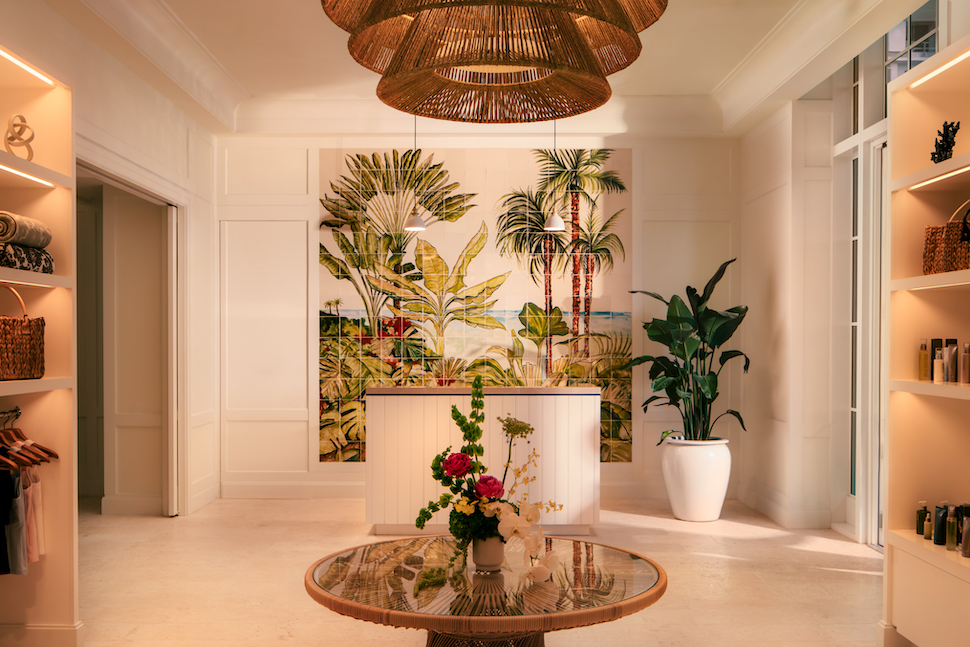
Paul Nunez discusses The Sanctuary at Naples Beach Club, A Four Seasons Resort, and the changing rhythm of resort wellness.
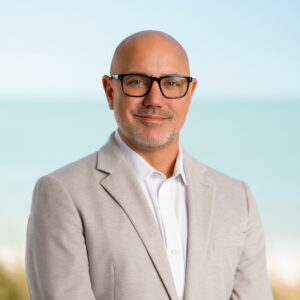
Paul Nunez, Director of Spa, Fitness & Wellness at The Sanctuary, Naples Beach Club, A Four Seasons Resort
With more than three decades devoted to the evolution of spa and wellness, Paul Nunez brings both technical expertise and a grounded understanding of healing practices to his work.
Beginning his career as a massage therapist, he has since helped shape educational programs, operational strategy, and emerging wellness technologies across a wide spectrum of hospitality and wellness environments. His experience spans some of the industry’s most respected destinations—including Four Seasons and Marriott International luxury properties—as well as an immersive Ayurvedic retreat setting grounded in traditional teachings. Along the way, Paul has remained committed to exploring how innovation can support—not replace—the human experience of care, including through his work with wellness technology company Aescape.
At the center of his philosophy is a belief that true luxury lies in transformative experiences—where guests discover balance, renewal, and a profound sense of wellbeing.
I recently spoke with Paul about his new role as Director of Spa, Fitness & Wellness at The Sanctuary, the 30,000-square-foot wellness destination at Naples Beach Club, A Four Seasons ResorT,and his perspective on the evolving future of spa and wellness.
On the Shift from Treatment to Experience
Mary Bemis: You’ve spoken about removing the “guardrails” around the spa—allowing guests to engage with it throughout their stay, not just through booked services. What does that shift represent for you, and how does it change the role of the spa within a resort?
Paul Nunez: So many spas feel the need to protect their space (and for good reason), ensuring that guests can access the spa only for a spa treatment or by purchasing a day pass. At Naples Beach Club, A Four Seasons resort, our goal is for The Sanctuary to be a part of the experience for each guest, so that they can enjoy the fitness center and Aquathermal amenities whenever they choose. This adds incredible value to a resort stay.
On Scale vs. Intention
MB: The Sanctuary is expansive in experience, though not oversized in treatment rooms. How did you approach designing for flow, rather than volume—and what does that say about where spa is headed?
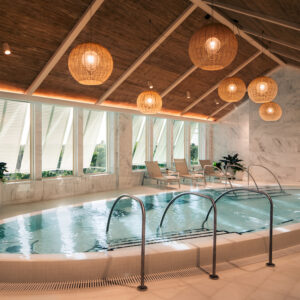
The Vitality Pool at The Sanctuary at Naples Beach Club, A Four Seasons Resort
PN: The balance we established between treatment rooms and spa amenities was very intentional—providing enough treatment rooms to generate strong revenue without overloading the space with incoming guests each hour. This approach allows ample room for our resort guests and residents to enjoy the facilities comfortably, without feeling crowded. In the past 15 years, the number of treatment rooms in spas has diminished, as well as space for additional amenities. We see wellness trending toward thoughtfully designed communal spaces that foster connection and drive repeat visits.
On the Return of Spa Philosophy
MB: You mentioned this as a return to spa philosophy within hospitality. What, in your view, had been lost—and what does it mean to bring that philosophy back in a modern resort setting?
PN: What I think has been lost is the sense of community and togetherness; we tend to seek solitude in spas, when I think human connection is just as important. In a communal spa setting, guests have the opportunity to share a space that actively supports their health and wellness.
On Communal vs. Private Experience
MB: The co-ed thermal space has become a central part of the guest experience here. What have you observed about how people move through—and respond to—shared wellness environments today?
PN: One of the little advantages of my office being in close proximity to the Aquathermal space, is that I can often hear our guests interacting. What I hear the most is laughter. While I can’t hear specific conversations, I can catch their tones and vibes. It is a fun and liberating space, and I have observed how much joy it creates!
What I think has been lost is the sense of community and togetherness; we tend to seek solitude in spas . . .
On Customization and the “Book Time” Model
MB: You’re building toward a more flexible, therapist-led approach with “book time.” How does that change the treatment dynamic, both for the guest and for the practitioner?
PN: Building a full team from the ground up is the type of project that I have wanted to develop for years. The concept itself is simple: when you can create a fully customized experience for each guest, supported by exceptional tools and highly skilled service providers, the result is truly unique.
While this approach does require more consultation, we believe that added time is invaluable, as it allows us to truly understand the individual we are working with and tailor the experience to their specific needs.
These treatments take place in our VIP Spa Suite, Bougainvillea, which features a dedicated consultation and pre-treatment area, a couple’s treatment space, and an advanced shower steam room equipped with cutting-edge technology—so advanced that I’m still discovering all of its capabilities.

The women’s locker room at The Sanctuary
From the therapist’s perspective, they have access to our full range of services, including every massage, body treatment, and facial we offer. The suite is also equipped with Hydrafacial, Oxylight, and LPG Endermologie systems, allowing therapists to design each treatment using the complete spectrum of our offerings. This flexibility ensures that no two experiences are ever the same.
For guests, the experience is equally empowering. They can choose from two- to four-hour timeframes and actively participate in creating their personalized wellness journey, while also learning more about the treatments and how they work.
My team is incredibly excited about introducing this new option, and we believe it represents a meaningful evolution of our spa experience.
On Training, Hiring, and the Dual-licensed Model
MB: You’ve been intentional about building a team of dual-licensed therapists from the outset. How does that decision shape the level of care—and the kind of spa culture—you’re able to create?
PN: The hiring process for this team has been extremely intentional. Our goal was to build a group primarily composed of dual‑licensed therapists—professionals who can truly do it all. This approach allows us to introduce the “book time” concept and create experiences that are both flexible and creatively engaging.
For this reason, our concept was to hire only massage therapists or dual‑licensed therapists—without adding estheticians—and to intentionally design treatments that showcase the full breadth of their training. This includes offerings such as a 100‑minute massage and facial, facial‑body combinations, or fully integrated treatments that incorporate multiple modalities.
Additionally, of the six massage‑only therapists currently on the team, four are returning to school to obtain their skincare licenses—further reinforcing our commitment to professional growth and to maximizing the talent within our spa.
On the Next Generation of Spa Guests
MB: From younger guests entering the spa to kids already practicing mindfulness, you’re seeing a shift in how early wellness begins. How is that influencing how you think about programming—and the future of spa?
PN: Yes, this has been another focus of mine over the past seven years, perhaps because I have a 13-year-old daughter and see how savvy she is with her skincare and wellness routines. In fact, our next project at our spa is to develop our Teen Skincare Class, where groups of two to six teens can be hosted in our spa event room to learn all about skincare, build their personal care plan, and even take home a skincare starter kit from one of our great vendor partners.
This younger generation will be one of the first to have the term “wellness” in their vocabulary. For years, I have hosted kids’ yoga programming, and I have always loved greeting the kids as they come into class and asking how many of these four- to 12-year-olds have ever done yoga or mindfulness sessions before. I was always surprised to see so many hands raised! As a percentage, I would say about 75 percent of the kids coming had been in a class like this before at their school. That really says a lot about how wellness has been adapted into our society.
And let’s not forget these kids will be future spa guests, too!
Mary Bemis
Mary Bemis is Founder & Editorial Director of InsidersGuidetoSpas.com. An advocate for all things spa, Mary forged a vocabulary for spa reportage that is widely used by those who cover the issues today. Recently honored as a Top 30 Influential Voice Transforming Wellness by Medika Life, Mary is an inaugural honoree of Folio’s Top Women in Media Award. Her spa media roots run deep—in 1997, she launched American Spa magazine, in 2007, she co-founded Organic Spa magazine, and in between serving on the ISPA and NYSPA Board of Directors, she was on the launch teams of Luxury SpaFinder and New Beauty magazines. Named a "Wonder Woman of Wellness" by American Spa magazine, Mary was honored by the International Spa Association with the distinguished ISPA Dedicated Contributor Award. She is a special advisor to the non-profit Global Wellness Day.
- Web |
- More Posts(91)